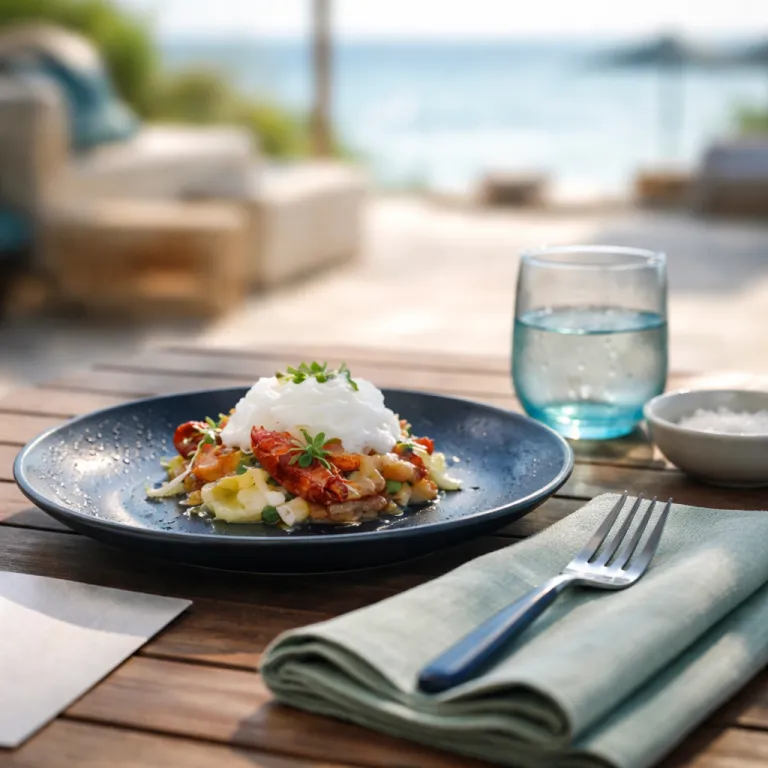
How adults only changes the rhythm of resort dining
An adults-only resort dining experience starts with time, not theatrics. Without early seatings built around children, restaurants can stretch service into the late evening and design a dining experience that feels unhurried, with food arriving at a pace that suits conversation rather than a bedtime. This slower rhythm shapes the entire atmosphere, from the first drink at the bar to the last spoon of dessert.
At Bucuti & Tara Beach Resort in Aruba, the team leans into this freedom by offering romantic tables set directly on the sand, where adults linger for several hours and let the nights unfold at their own tempo. According to the resort’s Elements restaurant sample menus, a typical three-course beachfront dinner might feature lionfish ceviche, Caribbean spiny lobster, and a shared dessert for around US$80–100 per person before wine, with seatings timed so no table has to be turned quickly. The absence of family noise means the resort can keep lighting low, music subtle, and service focused on small details that signal quality, such as adjusting pacing between courses or suggesting a lighter dish when guests mention a long trip the next morning. For couples used to rushing through meals at family resorts, this kind of adults-only setting often feels like the best luxury of all.
Service design shifts too, because staff do not need to split attention between children and adults, which quietly elevates food quality and the overall experience. Servers can explain the menu in depth, talk through wine pairings, and recommend the best dishes for guests who want a long, layered dining experience rather than a quick inclusive resort buffet. At Bucuti & Tara, for example, the team notes in interviews with Caribbean Journal that they cap restaurant capacity to preserve a quiet atmosphere, even when the hotel is full. When a property is truly an adults-only resort for grown-up travelers, the restaurant team can confidently build evenings around tasting menus, chef’s tables, and late seatings that would be difficult to sustain in mixed-age resorts.
Menu freedom, culinary focus and the role of atmosphere
Once a resort commits to an adults-only concept, its chefs gain remarkable freedom with food. Menus no longer need to hedge toward the safe and familiar, so restaurants can highlight regional ingredients, bolder seasoning, and textures that reward slow eating, all while maintaining consistently good food quality across several venues. This is where an adults-only resort dining experience becomes a genuine differentiator rather than a marketing line.
Hideaway at Royalton Negril in Jamaica illustrates the point with its intimate seven-course dinners, which would be challenging to execute in family resorts where attention spans are shorter and dining rooms louder. Drift Travel Magazine has profiled the property’s Dorado restaurant, noting that a typical tasting menu might move from local snapper crudo to slow-braised oxtail and rum-soaked desserts, with optional wine pairings that add roughly US$40–60 per person. Here, adults settle into a low-lit room, the bar team opens with a crafted aperitif, and the atmosphere stays hushed enough for the chef’s explanations to matter, turning each course into a small story about local produce and Caribbean waters. The result is a dining experience where guests often recommend the restaurant as the primary reason to book the property, not just a pleasant extra during their trip.
Across the Caribbean, many adults-only resorts now integrate farm-to-table and ocean-to-plate philosophies as a core part of their luxury promise. Emerging Destinations has highlighted properties that publish seasonal menus in advance and list partner farms by name, so guests can see exactly where their greens, herbs, and day-boat fish originate. With fewer menu compromises, a resort spa can align its best wellness programs with lighter, seasonal food, while the main restaurants lean into richer tasting menus and wine pairings for guests who want indulgence. When the atmosphere, service, and food quality all point in the same direction, the adults-only positioning stops being about age and starts being about intent.
The rise of multi concept resorts and when more is not better
Multi concept adults-only resorts are reshaping how couples think about a resort-based trip. Properties like Hyatt Zilara Cap Cana in the Dominican Republic or the new Royalton Vessence Barbados, which launches with thirteen distinct dining concepts, promise full access to a small culinary neighborhood under one roof, from casual beach food to white-tablecloth restaurants. For guests, the adults-only resort dining experience becomes a nightly decision between moods rather than a compromise with availability.
Choice, however, is only an advantage when quality keeps pace with quantity, and this is where curation matters more than sheer numbers. A luxury property on the Riviera Maya or in Punta Cana that spreads its culinary team too thin risks delivering many restaurants with average food, instead of a smaller group of venues where every plate feels considered and good. Caribbean Journal has reported on resorts quietly reducing the number of nightly outlets in low season to keep standards high, even when marketing materials still list the full roster. The best adults-only resorts edit their inclusive resort offerings, closing weaker concepts on slower nights and focusing on a few restaurants where the atmosphere, service, and views align to create memorable evenings.
Guests should look beyond the headline count of restaurants and ask how the resort manages reservations, bar programs, and staffing across venues. A well-run adults-only resort will publish clear guidance on which restaurants require advance bookings, how many nights will realistically allow you to sample the full access offering, and whether premium dishes carry supplements or are included so that guests do not pay unexpected surcharges. For example, some Riviera Maya properties allow guests to pre-book one or two signature dinners per week before arrival, while Punta Cana resorts may open online booking windows 7–14 days in advance. When a resort on Mexico’s Caribbean coast or elsewhere treats its dining portfolio as a curated collection rather than a checklist, the adults-only positioning translates into a more coherent, luxury-forward experience.
Regional flavors, from Riviera Maya to Punta Cana and Aruba
Location shapes every adults-only resort dining experience, especially in regions where food culture runs deep. Along the Riviera Maya and Mexico’s Yucatán coastline, the best resorts now build menus around local corn, cacao, and seafood, pairing them with modern Mexican techniques that feel current without losing a sense of place. Guests who care about food quality should look for restaurants that name specific producers and explain how they work with nearby farms and fisheries.
In Punta Cana and Cap Cana, chefs lean into ocean-to-plate cooking, with grilled fish, ceviches, and shellfish towers that reflect the Caribbean’s daily catch, while resort spa cafés focus on lighter bowls and juices that support best wellness programs. Aruba’s Bucuti & Tara Beach Resort, for example, uses its adults-only status to stage romantic dinners on the sand, where the views of the sea and the quiet atmosphere turn even simple dishes into something special. Caribbean Journal notes that the resort limits the number of beachfront tables per night and asks guests to reserve several days ahead, which helps maintain a calm, private feel. When adults choose a property for its culinary reputation, they are effectively choosing how they want their trip to taste, from breakfast at the bar to the last dessert shared under the stars.
Across these destinations, the most compelling adults-only resorts treat restaurants as the heart of the property rather than a supporting amenity. They invest in training so that staff can recommend pairings, explain regional dishes, and guide guests through multi-course menus without rush, which is only possible in an adults-only context. For couples comparing resorts in the Riviera Maya, Punta Cana, or Aruba, it often makes sense to skip content that focuses only on room size and instead read detailed dining reviews and sample menus, because the restaurant program will shape more of the stay than almost any other element.
How to choose an adults only resort for serious dining
Selecting the right adults-only resort dining experience starts with asking precise questions before you book. Look at how many restaurants the resort operates relative to its number of adults, whether reservations are required, and how many nights will be needed to enjoy the full access offering without rushing. A property that treats food as a core pillar of its luxury promise will usually publish detailed menus, highlight food quality, and be transparent about which venues are part of the inclusive resort plan and where guests might pay supplements.
Pay attention to how the resort talks about its bar culture, because drinks often signal the broader culinary philosophy. A serious cocktail program, thoughtful wine list, and low-key evening atmosphere usually indicate that restaurants are designed for adults who value conversation and pacing, not just volume and speed. When a resort in the Riviera Maya, Punta Cana, or Mexico’s Yucatán region aligns its resort spa, wellness activities, and dining experience around the same vision, you can expect a coherent stay where good food and best wellness coexist rather than compete.
Practical steps matter too; make reservations in advance, check dress codes, and inquire about dietary accommodations, because “Do adults-only resorts accommodate dietary restrictions?” and “Are dining options at adults-only resorts more expensive?” are questions that shape real expectations. Many properties now offer online pre-arrival forms where guests can flag allergies, vegan or gluten-free needs, and preferred dining times, which helps the culinary team plan. For deeper planning, premium trip-planning tools and concierge-style online services can help you map restaurant choices against your travel dates. When you match the right property to your priorities, the adults-only positioning stops being a label and becomes a promise that every dinner will feel like the best table in the house.
Frequently asked questions about adults only resort dining
What is an adults only resort and how does it affect dining ?
An adults-only resort is a property reserved for guests aged eighteen and over, which changes the entire dining dynamic. Without children, restaurants can offer later seatings, quieter rooms, and menus that focus on complex flavors rather than universal crowd pleasers. This often leads to higher food quality, more attentive service, and a dining experience that feels closer to a city restaurant than a typical holiday buffet.
Are dining options at adults only resorts more expensive ?
Prices vary widely, because some adults-only resorts operate as an inclusive resort while others price restaurants à la carte. In many luxury properties, premium cuts, specialty tasting menus, or top-shelf drinks may carry supplements, so guests should check what is included before they pay any unexpected charges. The key is to compare the overall value of the adults-only resort dining experience, not just the headline rate.
Do adults only resorts accommodate dietary restrictions ?
Most serious adults-only resorts are well prepared to handle dietary needs, from vegetarian and vegan preferences to allergies and medical requirements. Guests should inform the property before the trip and again at check-in, so the restaurants and bar teams can plan suitable options without compromising food quality. Clear communication usually results in a smoother dining experience and more confidence at the table.
How far in advance should I reserve restaurants at an adults only resort ?
For popular restaurants in high-occupancy resorts, reservations are often essential several days in advance. Couples visiting the Riviera Maya, Punta Cana, or Aruba during peak periods should book key venues early in the trip to secure preferred times and views. When a property offers full access to many restaurants, planning ahead ensures you can sample the best options without stress.
Can the restaurant alone justify booking an adults only resort ?
At some properties, yes, the restaurant program is strong enough to justify choosing that resort over competitors. Resorts like Bucuti & Tara Beach Resort or Hideaway at Royalton Negril use their adults-only status to create dining experiences that feel closer to destination restaurants than hotel outlets. For travelers who value food and atmosphere, these properties turn dinner into the central reason to book, with the rooms and spa as supporting luxuries.
References
Caribbean Journal (caribjournal.com); Drift Travel Magazine (drifttravel.com); Emerging Destinations (emergingdestinations.com).